3 meses GRATIS

ALCONCHEL DE LA ESTRELLA (Cuenca)

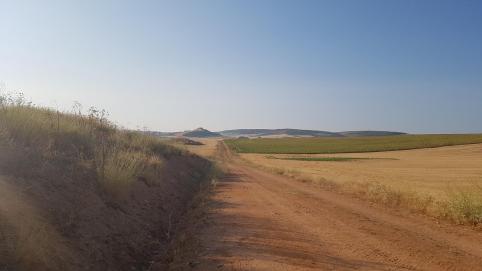
Camino de Cañada Marta, encarando el Cerro Castillo
Foto enviada por eu

Hōnen Matsuri

El festival de la fertilidad más conocido como el día del pico celebrado el 15 de marzo en Japón. El más conocido de estos festivales se lleva a cabo en el pueblo de Komaki, al norte de Nagoya. Hounen significa buena cosecha en japonés, y matsuri es un festival o feriado. El festival y la ceremonia de Hounen celebran la bendición de una cosecha abundante además de prosperidad y fertilidad.

Las características más interesantes del festival son los sacerdotes shinto tocando instrumentos ... (ver texto completo)
Referencias

1. Idus en latín es femenino plural, pero en español, por tratarse de los días, es masculino plural "los idus", como así se refleja en el DRAE.
2. H. H. Scullard, Festivals and Ceremonies of the Roman Republic, Cornell University Press, 1981, pp. 42–43.
3. "Forum in Rome" en Oxford Encyclopedia of Ancient Greece and Rome, Oxford University Press, 2010, p. 215.
4. Scullard, Festivals and Ceremonies of the Roman Republic, p. 43.
5. Scullard, Festivals and Ceremonies of the Roman Republic, p. 90.
6. Juan Lido (siglo VI), De mensibus, 4.36. Otras fuentes la sitúan el 14 de marzo.
7. Michele Renee Salzman, On Roman Time: The Codex-Calendar of 354 and the Rhythms of Urban Life in Late Antiquity, University of California Press, 1990, pp. 124 y 128–129; William Warde Fowler, The Roman Festivals of the Period of the Republic, Londres, 1908, pp. 44–50.
8. Maria Grazia Lancellotti, Attis, Between Myth and History: King, Priest, and God, Brill, 2002, p. 81; Bertrand Lançon, Rome in Late Antiquity, Routledge, 2001, p. 91; Philippe Borgeaud, Mother of the Gods: From Cybele to the Virgin Mary, Johns Hopkins University Press, 2004, pp. 51, 90, 123, 164.
9. Gary Forsythe, Time in Roman Religion: One Thousand Years of Religious History, Routledge, 2012, p. 88; Lancellotti, Attis, Between Myth and History, p. 81.
10. Michele Renee Salzman, On Roman Time: The Codex Calendar of 354 and the Rhythms of Urban Life in Late Antiquity, University of California Press, 1990, p. 166.
11. Jaime Alvar, Romanising Oriental Gods: Myth, Salvation and Ethics in the Cults of Cybele, Isis and Mithras,, Brill, 2008, p. 288–289.
12. Firmico Materno, De errore profanarum religionum, 27.1; Rabun Taylor, "Roman Oscilla: An Assessment", RES: Anthropology and Aesthetics 48 (Otoño 2005), p. 97.
13. Juan Lido, De Mensibus 4.59; Suetonio, Otho 8.3; Forsythe, Time in Roman Religion, p. 88.
14. Forsythe, Time in Roman Religion, p. 88.
15. Macrobio, Saturnalia 1.21.10; Forsythe, Time in Roman Religion, p. 88; Salzman, On Roman Time, p. 168. ... (ver texto completo)
“2005-03-15 17:54:06 No es Althia, sino Altheia.”
"Camino de La Cañada Marta, encarando el Cerro Castillo"

Ruta nº 14. Camino de La Cañada Marta
VIERNES 24 de AGOSTO 2018 07:58

RECORRIDO

Iniciamos la marcha, como siempre, en La Esquina de Costumbre, bajamos a la carretera girando a la izquierda en dirección Madrid. Pasamos "Las Columnas" y seguimos bajando, dejando "Los Barrancos" y "La Cruz de La Muerta, a la derecha, y La Colada de Fuentelespino de Haro. Llegamos al Camino de Villar de Cañas y seguimos carretera abajo hasta cruzar el ... (ver texto completo)